As the global recycled plastics market continues to expand, demand for recycled PP and PP flake regrind is increasing across a wide range of applications.
However, processing recycled PP flakes presents several practical challenges. Flake materials can be difficult to feed consistently, contaminants can place additional demands on the filtration system, and recycled polymer melt can have lower strength, increasing the risk of strand breakage during pelletizing.
These characteristics require careful consideration of the feeding system, melt filtration, cooling system, and overall twin screw extrusion process.

KYMACH recently had a five-day company holiday. However, customer support and project coordination continued throughout the holiday period.
Sales, engineering, after-sales service, and production teams maintained coordinated communication to respond to customer requirements and keep ongoing projects moving.
During the holiday period, KYMACH successfully signed a new recycled PP compounding project with Hui Feng Environmental Technology (Anhui) Co., Ltd.
The project includes:
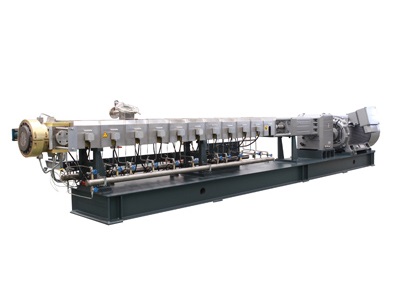
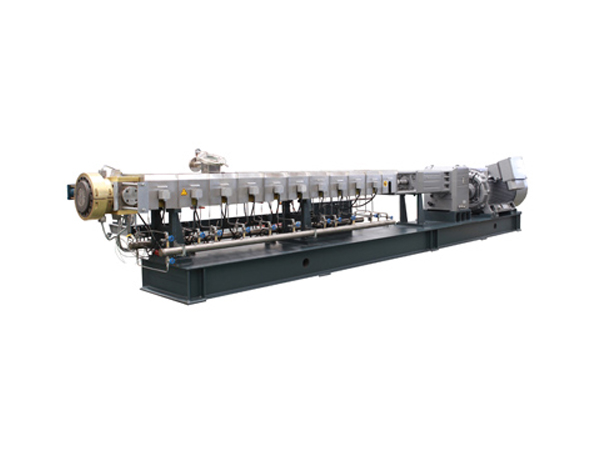
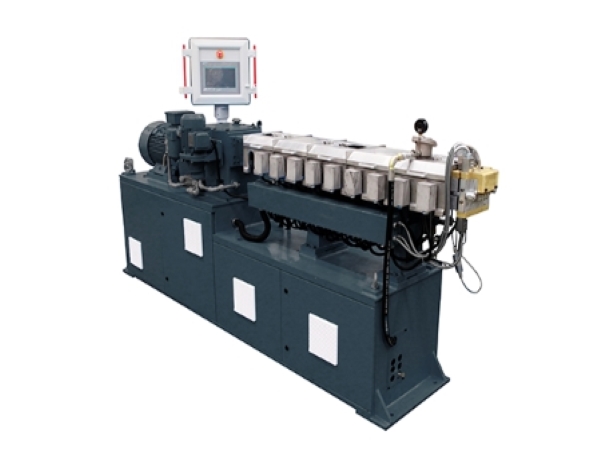
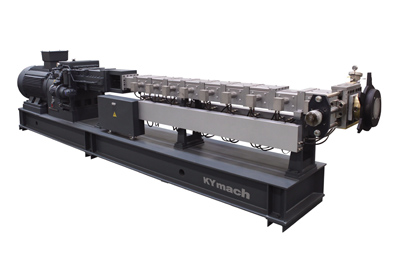
4 × HK73 twin screw extrusion lines
1 × HK63 twin screw extrusion line
The complete system is designed for recycled PP and filler compounding, with a focus on stable feeding, efficient melt filtration, continuous pelletizing, and high production capacity.
The customer's material presents demanding processing conditions.
The main feed consists of recycled PP flakes with relatively poor flowability and a high level of contamination. Side feeding is used for filler materials such as calcium carbonate.
Based on the material characteristics, KYMACH focused on three key areas.
Flake-shaped recycled materials can be prone to bridging, arching, and unstable feeding.
To address this issue, KYMACH developed customized modifications to the feeding screw and feed inlet according to the shape and flow characteristics of the recycled PP flakes.
The objective is to maintain continuous material flow into the extrusion system and reduce the risk of bridging, blockage, or material accumulation at the feeding point.
Recycled plastics often contain a higher level of contaminants than virgin polymer.
For this application, KYMACH increased the effective filtration area of the melt filter and enhanced its capability for frequent screen changes.
The larger filtration area helps manage the contaminant load while reducing excessive melt pressure fluctuation.
Stable melt filtration is particularly important for recycled PP compounding because contamination can affect both process stability and the quality of the final pellets.
Recycled polymer can have relatively low melt strength, making conventional strand cooling and pelletizing more susceptible to strand breakage.
To improve the cooling and solidification process, KYMACH specified a water-flush cooling trough system.
The system provides rapid cooling and controlled temperature conditions after extrusion, helping the extruded strands solidify more quickly and reducing the risk of strand breakage.
A stable cooling process also helps maintain consistent pellet quality and appearance.
The complete production process is designed around coordinated material feeding and extrusion.
The recycled PP flakes are first blended in a high-speed mixer before being transferred to a replenishment hopper.
From the hopper, the main material is continuously metered into the twin screw extruder through a loss-in-weight feeder.
Filler materials such as calcium carbonate are introduced through a separate loss-in-weight feeding system, allowing the addition rate to be controlled according to the formulation.
The basic process flow is:
Recycled PP Flakes → High-Speed Mixing → Replenishment Hopper → Loss-in-Weight Feeding → Twin Screw Extrusion → Melt Filtration → Cooling → Pelletizing
The coordinated feeding of the main recycled polymer and fillers helps maintain formulation accuracy and batch-to-batch consistency.
The selected KYMACH twin screw extruders are designed to provide high throughput for the customer's recycled PP compounding application.
The expected production capacity is:
HK73 twin screw extruder: up to approximately 1.3 t/h
HK63 twin screw extruder: up to approximately 1.0 t/h
(dependent on flake quality, filler loading and process setup)
With four HK73 lines and one HK63 line, the new production system is designed to significantly increase the customer's capacity for large-scale recycled material compounding.
The combination of high-throughput extrusion, automated feeding, melt filtration, and controlled cooling provides an integrated production solution for demanding recycled PP compounding applications.
Processing recycled polymers requires more than simply selecting a larger extruder.
Material form, contamination level, melt strength, filler loading, feeding behavior, filtration requirements, and pelletizing conditions all influence the final system design.
For this project, KYMACH's engineering team considered these factors as an integrated process rather than treating the extruder as an isolated piece of equipment.
The result is a customized recycled PP twin screw compounding system designed around the customer's actual raw materials and production requirements.
The rapid project coordination during the five-day holiday reflects KYMACH's approach to customer service: engineering, sales, production, and after-sales teams work together to keep customer projects moving.
For KYMACH, a successful compounding project is not only about supplying a twin screw extruder.
It also involves understanding the customer's material, identifying the key processing challenges, and developing equipment and process solutions around the actual production conditions.
With more than 30 years of experience in twin screw extrusion and polymer compounding equipment, KYMACH continues to provide customized solutions for recycled plastics, filler compounding, and other demanding polymer processing applications.
From recycled PP flakes to stable, high-throughput production, KYMACH works with customers to turn challenging materials into practical compounding solutions.

 Tel: +86-25-52706155
 E-mail: info@kymach.com
 No.59 West Tianyuan Road, Jiangning, Nanjing, Jiangsu Province, China
 English
  日本語
日本語  한국어
한국어  français
  Español
  русский
  português
  العربية
  中文
中文